
 Chinese
What is a DC-DC Buck-Boost Converter?
In modern electronic devices, power management has always been a core aspect of design. With the development of portable devices, electric vehicles, solar energy storage systems, and industrial automation, the demand for efficient and stable voltage conversion is constantly increasing. Among the many power converters, DC-DC buck-boost converters have attracted considerable attention due to their unique voltage regulation capabilities. So, what is a DC-DC buck-boost converter? How does it work, and what application scenarios is it suitable for?
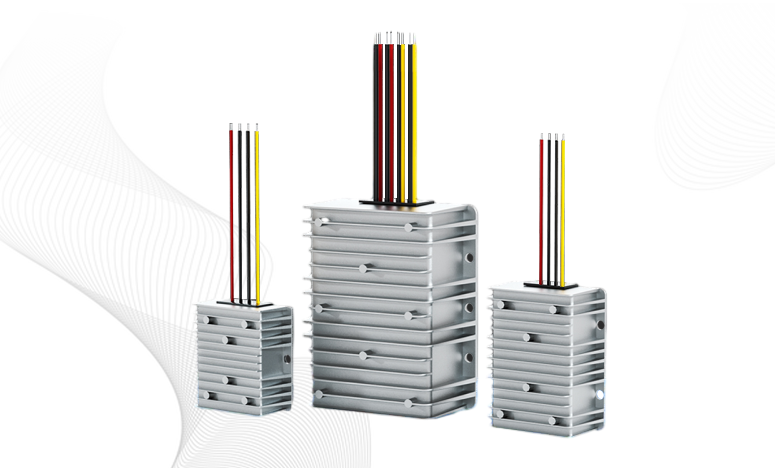
I. DC-DC Buck-Boost Converter Basic Concept
A DC-DC buck-boost converter is a power module that can convert an input DC voltage into a desired DC output voltage. Its most significant feature is that it can stably provide the required voltage regardless of whether the input voltage is higher or lower than the output voltage. For example, when the input voltage is 12V, the output can be either 5V or 15V, simply by adjusting the converter parameters.
Unlike ordinary buck or boost converters, a voltage regulator converter can handle both buck and boost modes, making it more flexible in scenarios with large voltage fluctuations. This is where the "buck-boost" part of its name comes from.
II. DC-DC Buck-Boost Converter Working Principle
Understanding the working principle of buck-boost converters requires first understanding their basic circuit structure. A typical DC-DC buck-boost converter consists of an inductor, a capacitor, a diode, and a switching element (usually a MOSFET). It regulates the output voltage by controlling the switching action to transfer energy between the energy storage elements.
1. Inductor Energy Storage Principle
During converter operation, the inductor acts as an energy storage "medium." When the switching element is on, current flows through the inductor, and the inductor stores energy; when the switch is off, the inductor releases energy to the output, maintaining a stable output voltage. By controlling the on and off time ratio (duty cycle) of the switch, the converter can precisely regulate the output voltage.
2. Boost and Buck Mode Switching
- Buck mode: When the input voltage is higher than the output voltage, the converter reduces the duty cycle to make the output voltage lower than the input voltage.
- Boost mode: When the input voltage is lower than the output voltage, the converter increases the duty cycle to raise the output voltage to the desired level.
Some buck-boost converters use a single circuit design that automatically switches modes based on the relationship between the input and output voltages, achieving seamless buck-boost operation. Modern control chips typically use pulse width modulation (PWM) or pulse frequency modulation (PFM) methods, balancing high efficiency and low power consumption.
3. Output Stability and Filtering
Because switching power supplies generate pulsating current, buck-boost converters usually include capacitors or LC filters at the output to smooth the output voltage and reduce ripple. This is especially important for devices requiring high voltage accuracy, such as LED drivers, motor control, or sensitive sensor systems.
III. Buck-Boost Converter Main Advantages
- High Flexibility: They can provide stable voltage regardless of whether the input voltage is higher or lower than the output voltage, adapting to fluctuating voltage environments.
- Small Size and High Efficiency: Compared to linear regulators, switching buck-boost converters can achieve efficiencies of 85%-95%, resulting in less energy waste and less heat generation, making them suitable for portable devices.
- Wide Range of Applications: They can be used in almost all scenarios requiring stable DC voltage, from consumer electronics and communication equipment to new energy vehicles and industrial control systems.
- Comprehensive Protection Functions: Most modern buck-boost modules have overcurrent, overvoltage, and short-circuit protection functions, improving system reliability.
IV. Application Scenario Examples
- Portable Electronic Devices: The battery voltage of devices such as smartphones, tablets, and wireless headphones fluctuates with charging and discharging. A buck-boost converter can provide a stable power supply to the chips.
- Solar Photovoltaic Systems: The output voltage of solar panels varies with light intensity. A buck-boost converter can provide a constant voltage supply to the energy storage battery.
- Electric Vehicles and Power Tools: The battery pack voltage changes with the charge level. A buck-boost converter can maintain stable operation of the motor and control system.
- Industrial Automation: Sensors and control modules require a stable voltage supply. Even with significant power fluctuations in industrial environments, a buck-boost converter can ensure normal operation.
V. Selection and Design Considerations
When selecting or designing a buck-boost converter, the following points should be considered:
- Input and output voltage range: Ensure the converter can cover the minimum and maximum voltages of the actual operating environment.
- Output current capability: Select the appropriate current rating based on the load requirements; otherwise, it may lead to overload or overheating.
- Efficiency and power consumption: High efficiency means less heat generation, making it more suitable for portable devices and long-term operation scenarios.
- Ripple and noise: Low ripple output is particularly important for sensitive electronic devices.
- Protection mechanisms: Overvoltage, overcurrent, and short-circuit protection can prevent equipment damage and improve system safety.
- Packaging and heat dissipation: Consider PCB design and heat dissipation conditions to ensure the module operates reliably within the operating temperature range.
VI. Conclusion
DC-DC buck-boost converters, as an important component of modern electronic power systems, are widely used in consumer electronics, industrial, automotive, and new energy fields due to their unique buck-boost capabilities, flexible adaptability, and high efficiency. They not only solve power supply problems caused by input voltage fluctuations but also improve system reliability and energy efficiency. During selection and design, factors such as voltage, current, efficiency, ripple, and protection functions need to be considered comprehensively to meet the needs of different applications.
In the future, with the development of new energy technologies, smart devices, and the Internet of Things, buck-boost converters will play an even more important role in a wider range of applications. Understanding their principles and characteristics will help engineers and designers better optimize electronic systems and achieve efficient and stable power management.