
 Chinese
What is a 12V to 24V DC-DC Converter?
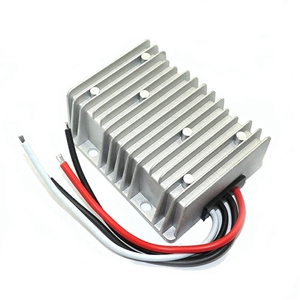
A 12V to 24V DC-DC converter, also known as a boost converter or step-up power supply, is an electronic device that increases the voltage from 12 volts DC to 24 volts DC while maintaining a stable output current. It's commonly used when you need to power 24V equipment — such as LED lights, industrial sensors, or vehicle electronics — from a 12V battery or power source. This kind of converter plays a vital role in many low-voltage systems, especially in automotive, marine, solar, and off-grid applications, where 12V batteries are standard but certain components or devices require 24V operation.
Unlike AC transformers that rely on alternating current, a DC-DC boost converter uses electronic switching circuits, inductors, and capacitors to raise voltage efficiently. It ensures a stable and reliable power output even under load variations, making it suitable for sensitive electronic systems and energy storage setups. A well-designed 12V to 24V converter is not just a voltage booster — it also provides overcurrent protection, thermal protection, and short-circuit safeguards, ensuring long-term durability and operational safety.
How Does a 12V to 24V Converter Work?
The working principle of a DC-DC boost converter is based on energy storage and release in an inductor. When the converter's switching transistor (often a MOSFET) turns on, the inductor stores energy by creating a magnetic field. Once the transistor turns off, the energy stored in the inductor is released and combined with the input voltage, resulting in a higher output voltage — in this case, 24V. This process occurs thousands of times per second through high-speed switching, controlled by a pulse width modulation (PWM) circuit that adjusts the duty cycle to regulate the output voltage precisely.
A typical boost converter consists of several key components:
- Inductor: Stores energy and controls current flow.
- Switching Transistor (MOSFET): Rapidly connects and disconnects the input voltage.
- Diode: Ensures that current flows in one direction only, preventing reverse current.
- Capacitor: Filters and stabilizes the output voltage.
- Controller IC: Monitors feedback voltage and adjusts PWM duty cycle for voltage regulation.
By carefully managing these elements, the converter can achieve efficiency levels of 90% or higher. This means most of the input power is converted to usable output, minimizing energy loss in the form of heat — a crucial factor in high-demand environments like solar energy systems or electric vehicles.
Key Features and Advantages
Modern 12V to 24V DC-DC converters offer numerous advantages that make them ideal for a wide range of applications. They are compact, lightweight, and highly efficient, allowing users to save space and energy. Most converters are built with wide input voltage ranges (e.g., 10–16V) and constant 24V outputs, enabling compatibility with car batteries and solar systems that experience voltage fluctuations.
Advanced models, such as the SUCH 12V to 24V DC Converter, integrate smart protection functions, including reverse polarity protection, overload shutdown, and thermal control. These features prevent damage during abnormal operating conditions and extend the product's service life. Additionally, converters with metal housings and waterproof ratings are designed for harsh environments such as marine vessels, outdoor solar setups, or heavy-duty vehicles.
Common Applications
12V to 24V DC converters are widely used in both industrial and consumer environments. In vehicles, they power 24V cameras, truck radios, and communication devices using the vehicle's 12V system. In solar energy systems, they connect 12V battery banks to 24V inverters or controllers. In marine electronics, they enable stable power supply to navigation and lighting systems. Other applications include security systems, wireless routers, industrial sensors, and portable equipment that require stable 24V DC power.
In research and development fields, DC-DC converters are also integrated into hybrid or electric propulsion systems, laboratory testing rigs, and automation setups where multiple voltage levels coexist. Their ability to maintain stable performance under dynamic load conditions makes them essential for both professionals and hobbyists working on custom energy solutions.
Choosing the Right Boost Converter
When selecting a 12V to 24V converter, several technical factors must be considered to ensure reliability and performance. The output current capacity should match or exceed the requirements of your device. For example, if your 24V load consumes 2A, you'll need a converter rated for at least 50W (24Vx 2A = 48W). It's also important to verify efficiency ratings (preferably >90%) and thermal performance, as high current loads can generate significant heat.
Other considerations include EMI suppression, cooling design, input voltage tolerance, and whether the converter supports constant current (CC) or constant voltage (CV) modes. For marine and automotive users, shock resistance and waterproofing (IP67 or higher) are highly recommended.
Conclusion
A 12V to 24V DC-DC converter is a powerful and versatile device that bridges the voltage gap between low-voltage systems and higher-voltage equipment. Its efficient energy conversion, protection features, and adaptability make it indispensable in automotive, marine, and renewable energy applications. Whether you're powering 24V devices from a 12V battery or building a solar energy storage setup, investing in a reliable converter — such as the SUCH DC-DC Converter — ensures safety, stability, and long-lasting performance.