
 Chinese
DC-DC Boost Converter Typical Step-Up Voltage Ranges and Applications
A DC-DC boost converter is a type of DC-DC power supply designed to increase a lower input voltage to a higher output voltage. Unlike linear regulators, boost converters offer higher efficiency, compact size, and design flexibility, making them ideal for a wide range of applications. Understanding typical input-to-output voltage ranges and their corresponding applications is essential for selecting the right DC-DC boost converter for your system.
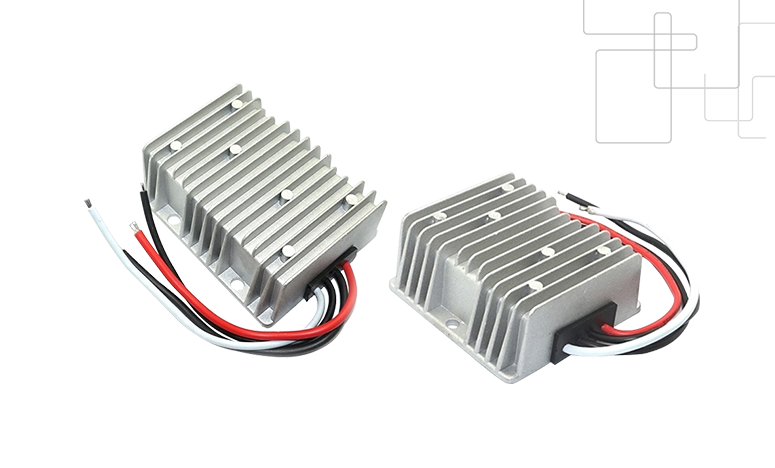
1. Low-Voltage Step-Up: 1–5V Input → 5–12V Output
Typical Step-Up Voltage: 1–5V → 5–12V
Low-voltage DC-DC boost converters are commonly used in battery-powered and portable devices, where the input voltage is insufficient for system electronics. Single-cell lithium batteries (3–4.2V), small solar panels, and energy harvesting modules fall into this category. These converters must maintain a stable output voltage despite fluctuating input levels due to battery discharge or varying solar irradiance. Step-up ratios in this range can reach up to 12x in extreme cases, allowing small inputs to power microcontrollers, sensors, or USB devices effectively.
- IoT sensor nodes
- Wearable devices
- USB-powered gadgets
- Embedded control boards
- Embedded control boards
- Key Considerations:
- Low start-up voltage
- High efficiency at light loads
- Short-circuit and overcurrent protection
- Compact PCB footprint
2. Medium Step-Up: 5–12V Input → 12–24V Output
Typical Step-Up Voltage: 5–12V → 12–24V
This voltage range supports medium-power systems where lower-voltage sources must supply standard 12V or 24V rails. The input voltage may vary due to battery packs or other power supplies, while the converter must maintain stable output for industrial sensors, automotive electronics, or embedded modules. Step-up ratios typically range around 2x, with efficiency optimized for full-load operation. Output voltage regulation, ripple, and thermal performance are crucial for reliable operation in sensitive systems.
- Applications:
- Automotive modules and ECUs
- Industrial sensors and transmitters
- Small actuators and relays
- Selection Tips:
- Wide input voltage range
- Stable output under dynamic loads
- EMI suppression
- Industrial mounting options
3. Industrial Boost Conversion: 12–24V Input → 24–48V Output
Typical Step-Up Voltage: 12–24V → 24–48V
Industrial boost converters handle higher power loads and are commonly used in PLC systems, factory automation, and telecom devices. Input voltage variations are compensated to maintain a stable 24V or 48V DC bus, ensuring reliable operation across multiple devices. Step-up ratios around 2x allow lower voltage sources to efficiently drive industrial equipment, while current capability and thermal management are designed for sustained operation
- Applications:
- PLC systems
- Factory automation equipment
- Industrial control cabinets
- Network and communication devices
- Selection Tips:
- Lower current for same power (efficiency)
- EMI and noise immunity
- DIN-rail or panel-mount form factors
4. High Step-Up Converters: 24–48V Input → 100–400V+ Output
Typical Step-Up Voltage: 24–48V → 100–400V+
High step-up DC-DC boost converters are used in renewable energy, EVs, and energy storage systems. Input voltages are relatively low, but output must meet system bus or inverter requirements. Step-up ratios can reach 8–10x or more, and converters must maintain high efficiency, low ripple, and thermal stability.
- Applications:
- Solar photovoltaic systems
- Industrial motor drives
- Battery energy storage systems
- Electric vehicles (EV/HEV)
- Key Features:
- High-voltage component ratings
- Wide input voltage tolerance
- Isolation and safety compliance
- High efficiency under full load
Conclusion
A DC-DC boost converter is defined by its input-to-output voltage step-up, not a fixed output voltage. Understanding typical step-up voltage ranges and applications—from low-voltage portable devices to high-voltage industrial and energy systems—ensures efficient and reliable power delivery. Choosing the right DC-DCconverter guarantees flexible, efficient, and safe DC power solutions across a wide range of applications.